
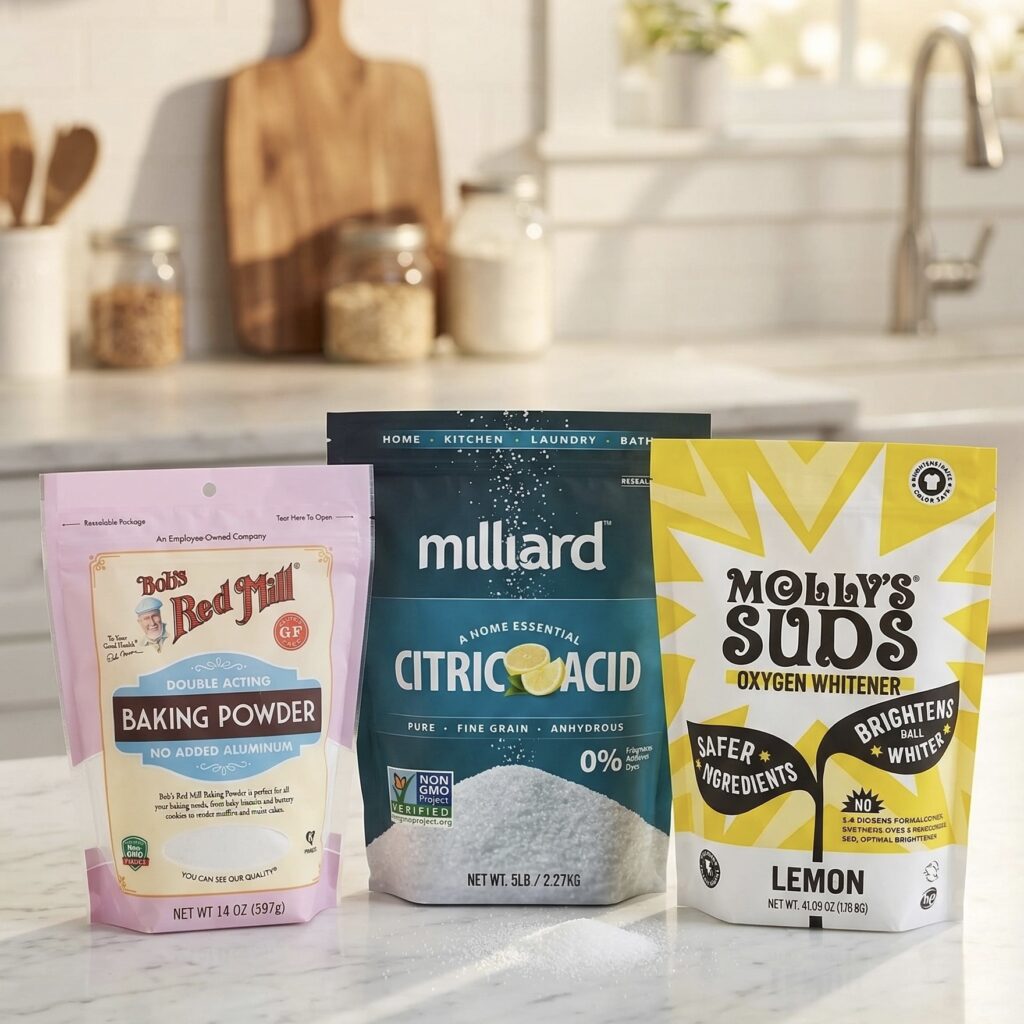
Three White Powders, Three Completely Different Jobs — The Cleaning Guide You Actually Need
They look almost identical. They’re all white. They all come in powder form.
And they do completely different things.
Citric acid, baking soda, and sodium percarbonate (oxygen bleach) are three of the most useful things you can keep under your sink — but only if you know which one to reach for when. Use the wrong one and you’ll either get no results, or worse, neutralize both at once and end up with nothing.
Here’s exactly what each one does, where it works, and how to use it — with real amounts and real times.
Citric Acid — The Limescale Killer
What it is: A natural acid derived from citrus fruits. Dissolves mineral deposits, limescale, and hard water stains like nothing else.
The rule: Anything white and crusty → citric acid.
What it cannot do: Remove organic stains (coffee, tea, food), kill bacteria, or whiten fabric.
✅ How to use it — room by room:
Kettle (limescale buildup) Add 1–2 tablespoons of citric acid to a full kettle of cold water. Bring to a boil. Turn off, let sit for 15–20 minutes. Pour out and rinse thoroughly. Run one plain water cycle before using again.
Shower screen and faucets Mix 2 tablespoons citric acid in 500ml warm water in a spray bottle. Spray generously onto limescale. Leave for 5–10 minutes. Wipe off — the scale will lift easily. Rinse with water.
Washing machine (drum cleaning) Add 3–4 tablespoons of citric acid directly into the drum (not the detergent drawer). Run an empty hot cycle (60°C / 140°F). This dissolves mineral buildup inside the machine and drum.
Dishwasher (monthly clean) Add 2 tablespoons of citric acid to the detergent compartment. Run an empty hot cycle. Removes mineral film and keeps the interior clean.
Coffee maker / espresso machine Dissolve 1 tablespoon in 500ml of water. Run through one full cycle. Follow with 2 plain water cycles to remove any residue.
❌ Don’t use on: Natural stone (marble, granite), cast iron, aluminum — citric acid will damage these surfaces.
Baking Soda — The Gentle Daily Cleaner
What it is: Sodium bicarbonate. A mild alkali that neutralizes odors, lifts light grease, and acts as a gentle abrasive. Safe enough to eat.
The rule: Smells bad or needs a gentle scrub → baking soda.
What it cannot do: Remove limescale, kill serious bacteria, or bleach stains.
✅ How to use it — room by room:
Fridge odor Place an open box or small open container of baking soda inside the fridge. Replace every 1–3 months. Absorbs food odors passively — no action needed.
Sink and bathtub Sprinkle baking soda directly onto the wet surface. Add a small squirt of dish soap. Scrub with a sponge or brush. The mild abrasion removes grime without scratching. Rinse well.
Carpet and upholstery odors Sprinkle baking soda generously over the carpet or sofa surface. Leave for at least 30 minutes (overnight for strong odors). Vacuum thoroughly. Works particularly well for pet smells.
Microwave Mix 1 tablespoon baking soda in 1 cup of water in a microwave-safe bowl. Microwave on high for 3–5 minutes. The steam loosens all food splatter. Wipe clean with a cloth.
Produce wash Add 1 teaspoon of baking soda to a large bowl of cold water. Soak fruit and vegetables for 12–15 minutes. Rinse well. Removes surface residue and pesticides more effectively than water alone.
Baby bottles and toys Mix 1 tablespoon baking soda in 1 cup of water. Soak items for 15 minutes. Rinse thoroughly. Safe, non-toxic, and effective.
❌ Don’t use on: Natural stone surfaces (can leave residue), aluminum, or anything you want disinfected — baking soda is a cleaner, not a disinfectant.
Sodium Percarbonate (Oxygen Bleach) — The Stain Destroyer
What it is: A compound of washing soda and hydrogen peroxide. When dissolved in hot water, it releases oxygen that breaks down organic stains and kills bacteria. The “friendly bleach” — no chlorine, no toxic residue.
The rule: Organic stains (coffee, tea, wine, sweat, food) or anything that needs disinfecting → sodium percarbonate.
The key: It only works in hot water (above 50°C / 120°F). Cold water and it does almost nothing.
✅ How to use it — room by room:
Stained tumbler or mug (coffee/tea stains) Add 1 tablespoon of sodium percarbonate to the cup. Pour boiling water to fill. Leave for 10 minutes. The stains will lift on their own — just rinse out. No scrubbing needed.
Stained laundry (pre-soak) Dissolve 1 tablespoon (10g) per 1kg of laundry in hot water first — never apply the powder directly to fabric. Submerge the stained clothing and soak for 1–2 hours (or overnight for heavy stains). Wash as normal.
Whitening whites and brightening colors Add 1 tablespoon to your regular laundry load in the drum. Use with a hot cycle. Whites get brighter; colors stay vivid. Safe for most fabrics except wool and silk.
Grout and tile deep clean Make a paste with sodium percarbonate and a small amount of warm water. Apply to grout lines with a brush. Leave 10–15 minutes. Scrub and rinse. The oxygen action lifts mold and discoloration.
Kitchen cloths and sponges (sanitize) Add 1 tablespoon to a bowl of hot water. Soak cloths, sponges, or brushes for 15–30 minutes. Kills bacteria and removes embedded smells. Rinse well.
Trash bin (deodorize and disinfect) Sprinkle 1–2 tablespoons into a clean, slightly wet bin. Leave for 10 minutes. Rinse out. Removes bacteria and organic odor at the source.
❌ Don’t use on: Wool, silk, delicate fabrics, or any surface you wouldn’t want bleached. Always test an inconspicuous area first.
The One Rule Everyone Gets Wrong — Don’t Mix Them
Citric acid + sodium percarbonate mixed together in water = they cancel each other out. The acid breaks down the oxygen before it can do its job, and you’re left with neither cleaning power.
Use them separately, one after the other if needed — but never in the same solution at the same time.
Quick Reference
| 🍋 Citric Acid | 🌿 Baking Soda | ⚡ Oxygen Bleach | |
|---|---|---|---|
| Best for | Limescale, mineral deposits | Odors, light grease, gentle scrub | Organic stains, whitening, disinfecting |
| Water temp | Cold or warm | Any | Hot only (50°C+) |
| Safe for fabric | ❌ | ✅ | ✅ (not wool/silk) |
| Disinfects | ❌ | ❌ | ✅ |
| Use on stone | ❌ Never | ❌ | ✅ |
Once you know what each one actually does, you’ll stop second-guessing and start getting real results. Three powders, three jobs — that’s all there is to it. 😊