
The Salt That Changed My Steak — A Finishing Salt Guide
There’s a moment that changes how you think about cooking. Sometimes it’s a technique. Sometimes it’s a pan.
For me, recently, it was a pinch of salt.
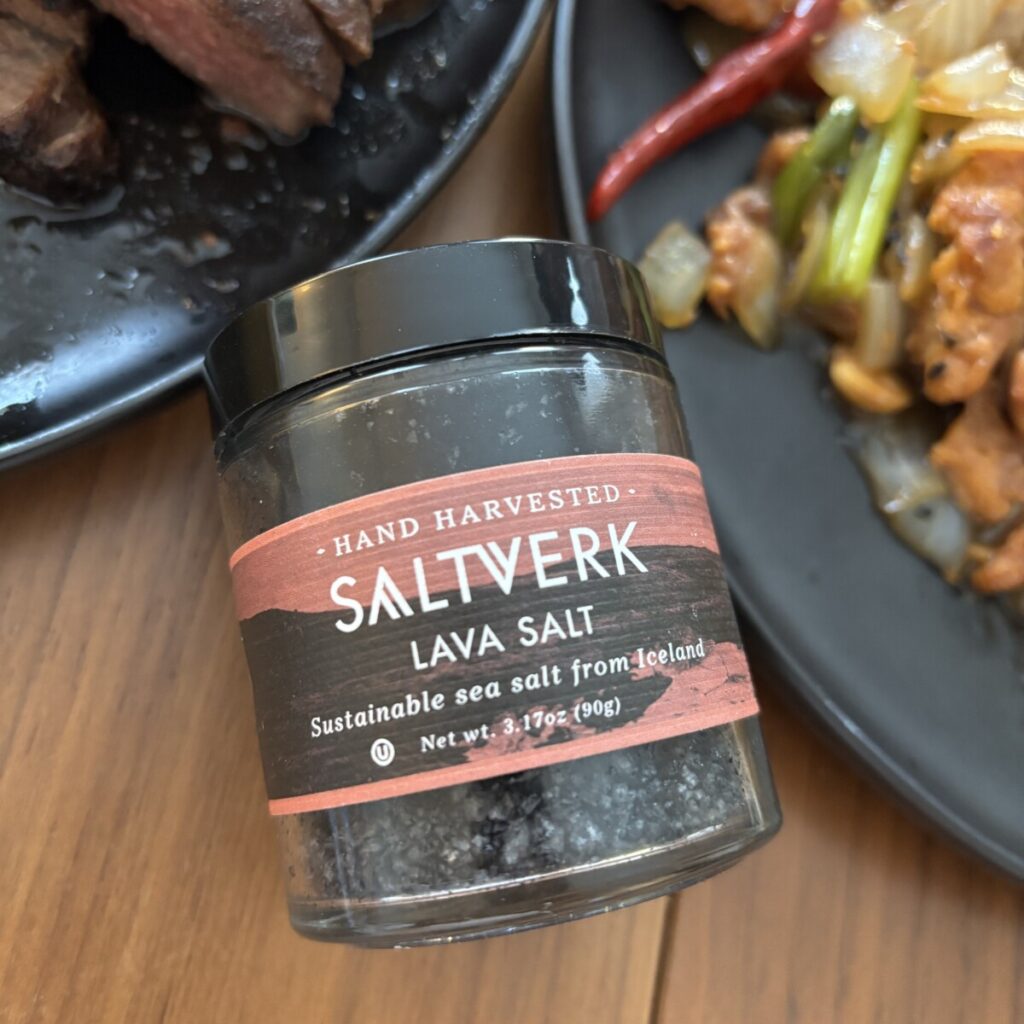
I was at a friend’s place for the weekend — wine, good conversation, a steak grilling on the stove. The meat was already good. Then someone reached for a jar of Saltverk Lava Salt and finished the steak with a light pinch right before serving. That was it. The same steak, one small addition — and suddenly the flavor had a different depth. More present, more layered, more finished.
It sounds simple. But it reminded me how much the right salt matters — and how rarely most of us think about it.
What Is a Finishing Salt, Exactly?
Finishing salt is salt used right at the end — just before serving, or directly on the plate. It’s not for cooking. It’s not dissolved into water or stirred into a sauce. It stays on the surface of the food, where it delivers three things that regular cooking salt can’t:
Texture — a real, satisfying crunch that adds contrast to soft or fatty foods like steak
Flavor — mineral complexity that enhances what’s already in the dish rather than just making it salty
Visual appeal — visible crystals on the surface that signal something intentional happened here
The key rule: finishing salt goes on after the heat. On a steak that’s been rested and plated, not in the pan. Heat dissolves the crystals and destroys the texture — which defeats the entire point.
The Best Finishing Salts for Steak
Saltverk Lava Salt — Iceland
This is the jar in the photo, and it’s genuinely special.
Saltverk’s lava salt is sea salt blended with activated charcoal, giving it a striking deep black color. The activated charcoal is purely visual — it doesn’t add flavor — but it creates a dramatic, beautiful contrast against the amber crust of a rested steak.
Saltverk sources its sea salt from the waters around the Reykjanes Peninsula in Iceland — some of the cleanest seawater in the world. The entire production runs on 100% geothermal energy, using water from local hot springs. It’s one of the few truly sustainable salt producers in the world, and that’s not marketing — it’s built into how they physically make the product.
The flavor is clean, mineral-forward, and what reviewers consistently describe as “melty” — it dissolves slightly on warm food, releasing its mineral character in a way that enhances without overpowering. It doesn’t taste aggressively of the sea. It just makes everything taste more like itself.
Best for: Steak, grilled meats, roasted vegetables, dark chocolate desserts Texture: Medium flakes, slight crunch that softens on warm food The standout feature: The visual drama and mineral depth together
Maldon Sea Salt Flakes — England
A true classic in the culinary world, Maldon salt is known for its distinctive pyramid-shaped flakes. These large, delicate crystals offer a satisfyingly crisp texture that pops in your mouth. Because of their structure, they don’t dissolve immediately — allowing their clean, bright flavor to stand out before the salt fully integrates.
Maldon has been made in Essex, England for over 140 years — four generations of hand-harvesting using the same traditional method. It’s the salt Ina Garten keeps on her stove. The one chefs and food editors reach for without thinking. It’s the default for a reason — clean, accessible, reliable, and genuinely elevating on almost anything it touches.
Best for: Everything. Steak, eggs, salads, baked goods, dark chocolate Texture: Large pyramid flakes with a satisfying crunch that lingers The standout feature: Universally flattering — works on almost any dish
Fleur de Sel — France
Often called the “caviar of salts,” Fleur de Sel translates to “flower of salt.” This delicate salt is hand-harvested by skimming the very top layer of salt ponds along the French coast. It’s prized for its light, slightly moist crystals and notably high mineral content.
The flavor is more nuanced than Maldon — slightly sweet, lightly briny, with a mineral complexity that makes it especially good on delicate proteins. It ranked higher than Maldon in a blind tasting by Tasting Table, which surprised even the reviewer. Better for leaner cuts like filet mignon, where the subtlety of the salt isn’t overwhelmed by fat.
Best for: Filet mignon, salmon, salads, caramel, chocolate desserts Texture: Small, moist, delicate crystals with a fine crunch The standout feature: Mineral complexity and elegance — the most refined option
Saltverk Birch Smoked Salt — Iceland
Saltverk slowly smokes its sea salt over local birch wood according to an ancient Icelandic tradition — rather than adding liquid smoke flavoring like many lesser producers do. The result is a subtle, clean smokiness that adds a campfire quality to grilled meats without being artificial or overpowering.
Great for anyone who loves that slightly charred, smoky quality. It amplifies the char on a steak or the caramelization on roasted vegetables without changing the underlying flavor of the food itself.
Best for: Grilled steak, pork ribs, roasted sweet potato, smoky cocktail rims Texture: Medium flakes, similar to standard Saltverk, with a clean crunch The standout feature: Authentic wood-smoked aroma with no artificial flavor
At a Glance
| Salt | Origin | Flavor | Best Pairing |
|---|---|---|---|
| 🖤 Saltverk Lava | Iceland | Clean, mineral, dramatic | Steak, dark chocolate |
| 🤍 Maldon | England | Clean, bright, classic | Everything |
| 🌸 Fleur de Sel | France | Delicate, briny, complex | Filet, seafood, desserts |
| 🔥 Birch Smoked | Iceland | Subtly smoky, clean | Grilled meats, pork |
The Simple Rule That Changes Everything
Salt during cooking seasons from within. Finishing salt seasons from without — it sits on the surface, crunches when you bite, and delivers flavor in a burst rather than a blend.
The difference is real. And once you’ve tasted a properly finished steak, you’ll understand why chefs have strong opinions about this.
Start with Maldon if you’re new to finishing salts — it’s the most forgiving and universally flattering. Then try Saltverk Lava Salt when you want drama and depth. After that, you’ll know exactly which direction you want to go. 😊